



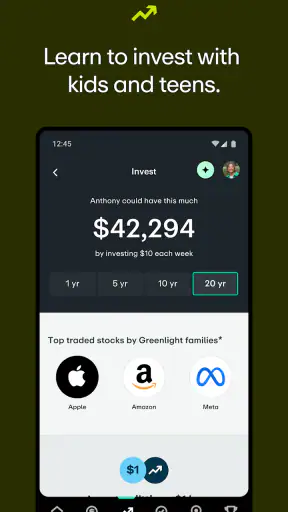


When a child starts asking for more independence with money, the usual choices can feel awkward. Cash is easy to lose, while handing over a regular bank card can give parents less visibility than they want. I found Greenlight: For Families most useful as a middle ground: a finance app built around a debit card for children and teenagers, with the parent managing the experience from the app. It is free to install, aimed at Everyone, and developed by Greenlight Financial Technology, Inc.
That description sounds simple, but the real value is in the workflow. A parent sets up the financial side, the child uses the card in everyday situations, and both sides get a clearer role. I would not treat it as a replacement for teaching money habits, and I would not choose it simply because a child wants a card. Its strongest use is as a supervised practice space where spending becomes visible and conversations can happen soon after a purchase.
From a request for independence to a managed spending routine
Starting with the family’s actual problem
The best starting point is not the card itself. It is the question of what you want to change. If your child needs money for school lunches, small purchases, transport, gifts, or occasional activities, Greenlight can give those expenses a clearer boundary than repeatedly handing over cash. If the problem is that nobody knows where allowance money went, the app can make the routine easier to follow. If the problem is a child who is not ready to make spending decisions, however, adding a card may create more work rather than less.
I would begin by agreeing on a small, specific purpose. For example, a parent might decide that the child manages personal snacks and weekend spending, while larger purchases still require a conversation. That division matters because the app works best when it supports a family rule instead of trying to become the rule. The parent remains involved, while the child gets a practical way to make limited choices.
The product belongs to the Finance category and has been available since late 2016. Its current version is 8.6.0 and it requires an operating system version 10 or later. Those details are worth checking before installing, especially on an older family phone. The app itself is free, but families should still think carefully about the broader financial arrangement they are creating rather than assuming that “free” means every possible service or situation will work the same way.
Setting expectations before the first purchase
Before the card is used, I recommend explaining three things to the child: what the money is for, what happens when the balance is low, and when a parent will review activity. This prevents the first declined purchase or unexpected balance from becoming the child’s entire impression of the app. A short conversation also makes the handoff feel intentional. The child is not simply receiving spending power; they are taking on a small responsibility inside a family system.
A useful approach is to give the child one category of spending to manage first. That creates a manageable feedback loop. The parent can see whether the child checks the balance, thinks before buying, and understands the difference between available money and money they expect to receive later. Once that routine feels comfortable, the family can decide whether a wider range of everyday spending makes sense.
This is one of the less obvious strengths of the service: it can turn an abstract lesson about budgeting into a sequence of real decisions. The lesson is not delivered as a worksheet. It happens when a child compares two snacks, waits before buying something, or realizes that a previous purchase changed what is available for the rest of the week.
The parent’s side of the flow
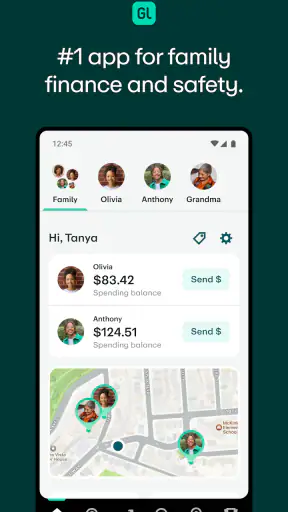
The parent controls the experience through the app, while the child uses the associated debit card. That division is important. A teenager may experience the card as a normal payment tool, but the family arrangement still gives the parent a place to supervise the account and discuss activity. I found this more useful than an ordinary debit card when the goal was gradual independence rather than complete separation.
The parent should treat the app as a place for regular check-ins, not an emergency dashboard opened only after something goes wrong. A quick review after a shopping trip can be enough to ask what the purchase was for and whether it matched the plan. The tone matters. Constant questioning can make the child feel watched, while no review at all removes much of the educational value.
One practical tip is to connect spending reviews to predictable moments, such as the end of the school week or a family planning session. That gives the child a chance to explain choices while the details are still fresh. It also reduces the temptation to turn every individual purchase into a confrontation. The app supplies visibility; the family decides how to use that visibility constructively.
The child’s side of the flow
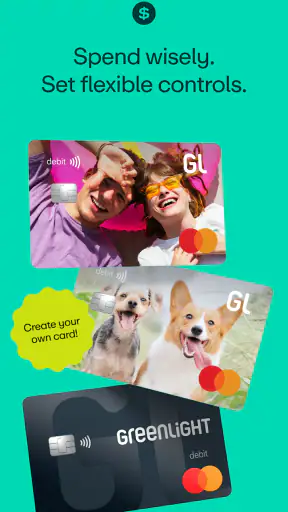
For the child, the experience is more concrete than receiving occasional cash. The debit card can be used for the spending the family has agreed to cover, and the child has to make choices within the available balance. That simple constraint is valuable. A child can see that money is limited without needing access to the parent’s main bank account or a full adult banking setup.
The best results come when the child is expected to participate rather than simply follow instructions. I would encourage them to check their balance before leaving home, remember that small purchases accumulate, and tell a parent when something does not look right. These habits are more important than the novelty of having a card.
There is also a useful emotional shift. Cash can disappear from a pocket and be forgotten. A card transaction is easier to connect to a conversation about priorities. That does not automatically make a child careful, but it gives the parent and child a shared reference point for discussing what happened.
A realistic everyday scenario
Imagine a teenager leaving for school with enough money intended for lunch and a small personal purchase. Before leaving, the child checks the available balance and decides whether to buy a drink as well as food. Later, the parent sees the activity in the app and asks whether the spending matched the plan. If the child spent more than expected, the conversation can focus on the consequence: there is less available for the next choice.
The outcome is not that the app magically prevents overspending. The outcome is that the spending decision has a visible beginning, middle, and end. The parent sets the arrangement, the child makes the purchase, and both can review what happened. That complete loop is what makes Greenlight more useful than simply giving cash and hoping the lesson sticks.
Where the handoffs become important
The handoff between parent and child is the heart of the product. The parent provides the structure and oversight; the child provides the decisions and feedback from real life. If either side skips its part, the experience becomes less effective. A parent who never explains the limits may create confusion. A child who never checks the balance may treat the card as an unlimited source of money.
There can also be a handoff between the app and the outside world. A child may use the card at a shop, school, or activity where the payment experience feels ordinary. The app is then where the family reconnects that ordinary purchase to the household budget. I like this separation because it lets the child practice independence in public without requiring the parent to stand beside every transaction.
At the same time, parents should not assume that digital visibility removes the need for communication. A transaction can show that money was spent, but it does not always explain the context. A purchase may have been necessary, shared with a friend, or made under pressure. The app helps start the question; it does not answer every question for you.
What happens when the routine works
When the workflow is working, the child gradually becomes better at planning small expenses and the parent spends less time handling every request individually. The card becomes a tool for practice rather than a reward that must be constantly negotiated. I see this as the clearest reason to consider the app: it creates a controlled transition between dependence and independence.
The service has attracted substantial attention, with more than a million installs and an average rating of 4.7 from roughly 86 thousand ratings. Those figures suggest that the basic idea resonates with many families, but they should not replace a personal fit check. A high rating cannot tell you whether your child is ready for a managed debit card, whether your family will review activity consistently, or whether your phone meets the minimum operating-system requirement.
For younger children, the value may come mainly from learning that money has limits. For teenagers, the value can shift toward planning, accountability, and preparing for more independent spending. In both cases, the parent’s involvement is not a minor add-on; it is the feature that gives the card its purpose.
How it compares with cash and ordinary banking
Cash remains better when you want a very visible, physical limit. Handing over a fixed amount makes the boundary obvious, and there is no phone setup involved. Cash is also useful for teaching counting and change. Its weaknesses are equally clear: it can be lost, it is harder to review later, and parents may need to remember exactly what was given and why.
An ordinary bank debit card may be a better fit for an older teenager who already understands budgeting and needs a broader banking relationship. It can feel more like preparation for adult financial life, but it may not offer the same family-centered structure. Greenlight sits between those options. It is less hands-off than a conventional adult account and less tangible than cash.
I would choose Greenlight when the family wants a managed bridge, not when the child is ready to operate entirely alone. The trade-off is that parents must remain engaged. If you want to give a card and stop thinking about it, this is probably the wrong approach. If you want a practical way to teach spending while retaining oversight, the arrangement makes more sense.
Where the flow breaks down
The first friction point is setup and expectation management. Any family financial app asks parents to slow down, understand the arrangement, and explain it clearly. That can feel like extra work compared with handing over cash. The work is worthwhile only if the family actually uses the information afterward.
The second break occurs when a child sees the card as permission to buy anything. A debit card does not create judgment. Parents need to define the boundaries in ordinary language and revisit them as the child grows. Without that conversation, the app may simply make impulsive spending more convenient to observe.
Another limitation is emotional rather than technical. Some children may feel uncomfortable knowing that a parent can follow their spending, even when the purpose is safety and teaching. Older teenagers who are ready for more privacy may prefer a less supervised arrangement. In that case, an ordinary banking option could be a better next step, provided the teenager has demonstrated enough responsibility.
There is also the possibility of a failed handoff: the parent assumes the child understands the balance, while the child assumes more money will appear automatically; or the child makes a purchase and the parent reacts without first asking for context. Greenlight cannot repair a family agreement that was never made. I would start small, set a review habit, and change the arrangement only after seeing how the child handles the first stage.
Who should use it and who should wait
I think the app is a strong match for parents who want children or teenagers to practice everyday spending with a visible safety net. It is especially suitable when cash is becoming inconvenient, when repeated allowance conversations are tiring, or when a child is asking for more control but is not ready for a fully independent account.
I would be more cautious if the child frequently loses cards, ignores agreed limits, or reacts badly to any financial supervision. In those cases, starting with cash, a written budget, or a simpler family routine may teach more with less friction. Families using older devices should also check compatibility before planning around the app, since the minimum operating-system requirement is version 10.
The product is free, which lowers the barrier to trying the app, but I would still approach the decision as a financial-management choice rather than a casual download. Read the setup screens carefully, make sure the parent understands the controls available in the current version, and agree on the family rules before the child starts spending. That preparation is more important than the installation itself.
My final assessment after following the full workflow
Greenlight works because it connects a parent’s oversight to a child’s real spending without pretending that either side can be removed. The parent starts with a goal, sets the structure, and reviews activity. The child receives a practical chance to make choices. The result is a repeatable money lesson built around ordinary purchases instead of abstract advice.
My strongest recommendation is to use it deliberately: begin with one spending responsibility, establish a calm review routine, and increase independence only when the child shows they can manage the earlier step. That approach exposes the app’s real strength while limiting its main risk, which is mistaking a managed card for automatic financial maturity.
With its 4.7 average and broad adoption, the app is clearly established enough to deserve consideration. Still, I would recommend it for the workflow, not for the numbers. Its real advantage is turning supervised spending into a shared family process. For parents who want that bridge between cash and adult banking, Greenlight: For Families is a sensible and practical choice. For families seeking a completely hands-off card or a fully independent bank account, another option will likely fit better.


